

Pipe Leak Repair in Beaufort County
Accurate Leak Location Before Targeted Plumbing Repair
A hidden plumbing leak shouldn’t lead to unnecessary openings in flooring, drywall, or concrete. At American Leak Detection of Savannah, we use acoustic sensors and thermal imaging to narrow down the source before physical repair work begins. This detection-led approach gives Beaufort County homeowners a clearer understanding of the affected area, likely access requirements, and appropriate repair scope.
Unexplained water use, damp walls or floors, musty odors, warm floor areas, reduced pressure, and running-water sounds can all justify an evaluation. Our plumbing leak repair service in Beaufort County starts with the symptoms and the property’s plumbing layout, then uses diagnostic findings to determine whether a targeted repair or a broader solution is appropriate.
When you bring us in early, you can keep better control of the project timeline and budget. Instead of opening walls or concrete in multiple areas to search for the problem, you receive a focused assessment that identifies where the leak is and what type of water leak repair may be required. Earlier detection can also help limit continued water exposure while you coordinate access, repair work, and any necessary finish restoration.
Get clear diagnostic information before repair work begins. Contact American Leak Detection of Savannah at (912) 289-8364 or request a service call to arrange a plumbing leak evaluation.
Leak Repair for Beaufort County Homes
A leak’s cause should be determined from the condition of the plumbing system and the diagnostic findings, not assumed from the property’s location. Pipe material, age, installation, water pressure, movement, corrosion, and previous repairs can all affect where a line fails. We evaluate the symptoms and plumbing configuration before recommending access or repair work.
Depending on the project, repair planning may also involve a property owner, utility provider, another contractor, or the applicable building-inspection authority. According to Beaufort County, the 2021 South Carolina Plumbing Code is among its adopted codes. Whether a particular repair requires a permit or inspection depends on the work, the property, and the authority responsible for it.
Where We Look During a Leak Evaluation
We don’t run a random inspection. We begin with the reported symptoms, water-use changes, fixture behavior, pressure concerns, and the known plumbing layout. That information helps us focus testing on the lines and areas most closely associated with the suspected leak.
Common evaluation areas include:
- Under-slab pressure lines: Supply lines running beneath concrete may require acoustic leak detection, thermal imaging, or other testing to narrow the affected area before access is created.
- Crawlspace and interior wall lines: Hot and cold water lines may be checked for visible moisture, sound, temperature differences, and other indications of leakage.
- Service line transition points: Connections between interior plumbing and the exterior water supply may be evaluated when symptoms indicate a possible water line leak.
This focused approach helps distinguish a primary supply-line problem from a fixture, appliance, branch line, or exterior service-line issue. For property managers responsible for residential units, clear findings can also support decisions about access, tenant coordination, and the order in which repairs should be addressed.
Signs You May Have an Active Plumbing Leak
Because supply lines can run beneath concrete or inside walls, a leak may remain hidden even without visible water. These are the indicators worth acting on before the damage compounds:
- Water bill spike: An unexplained increase in your water bill with no change in usage is a possible indicator of an active hidden leak.
- Warm spots on hard floors: Heat radiating through tile or hardwood can indicate a hot water line leaking beneath the slab.
- Damp walls or musty odor: Blistering paint, soft drywall, warping baseboards, or a persistent musty smell can indicate moisture migrating through wall cavities.
- Hissing sound in a quiet room: A hissing or rushing sound with no fixtures running can indicate pressurized water escaping from a closed system.
- Wet or sunken soil near the foundation: Persistently soft or unusually wet soil may indicate that a buried line is losing water into the ground.
Visible puddles aren’t required for a concealed leak to remain active. If a sign persists and can’t be explained by a fixture, appliance, irrigation system, or recent weather, a professional evaluation can help determine whether plumbing leak repair is needed.
Our Plumbing Leak Diagnostic Process
Every evaluation follows a structured approach. Before we start testing, our technician reviews your property’s history and symptoms with you. That conversation shapes where we focus the diagnostic work first.
We may review water-use changes, visible moisture, pressure symptoms, fixture behavior, and the property’s plumbing layout. From there, we deploy acoustic sensors and thermal imaging to map and evaluate the plumbing system without immediately opening walls or breaking floors. Acoustic leak detection listens for sound associated with water escaping under pressure, while thermal imaging identifies temperature patterns that may point to concealed moisture or a leaking hot water line.
Testing is used to isolate specific zones and narrow the location of the suspected failure. The appropriate method depends on the line, access conditions, building materials, and symptoms present. Although non-invasive testing can reduce unnecessary openings, physical access may still be required to confirm or repair the failed pipe.
When the diagnosis is complete, we explain the findings in plain language. Our Know Before You Go approach means we explain the proposed repair scope and cost before we proceed. You can also ask questions about the affected line, access point, repair options, and any finish restoration that may need to be coordinated separately.
From Leak Detection to Pipe Repair
We handle both the diagnostic and repair stages. Once the leak location is confirmed, the findings guide the plumbing access and repair plan rather than leaving a contractor to search through several possible areas.
Because we know where the problem is before physical work begins, repairs can be more targeted. For certain slab leaks, a direct spot repair may involve focused concrete removal at the confirmed location. Pipe rerouting may also be considered in some situations, particularly when access to the original line is impractical or the condition of the existing pipe makes a different route more appropriate.
The available options depend on the pipe material, leak location, access conditions, extent of deterioration, code requirements, and surrounding finish materials. We explain why an approach is being considered and what access it requires. A confirmed location doesn’t eliminate every disruption, but it can limit exploratory work and provide a defined starting point for repair.
The Cost of Waiting on a Hidden Leak
A concealed leak can continue affecting flooring, drywall, wall cavities, cabinets, and other finishes even when no standing water is visible. Exterior or under-slab leaks may also affect nearby soil, though the severity depends on the leak’s flow, duration, location, and the property’s construction.
Persistent moisture can create conditions that support mold growth, but whether growth occurs depends on the materials, temperature, ventilation, and length of exposure. Prompt evaluation helps establish where the water is coming from and what must be repaired. It can also reduce the chance that continued leakage adds secondary water damage or makes access and restoration more involved.
Leak Repair Costs & Timelines
Pricing and timing depend on the leak location, pipe type, access difficulty, required materials, and the amount of finish removal or restoration involved. A repair beneath an accessible crawlspace won’t have the same scope as a line under a slab, driveway, or finished floor. Multiple leaks or deteriorated piping can also require a broader plan than an isolated failure.
The diagnostic visit, repair planning, physical access, pipe repair, testing, and finish restoration may occur on different timelines. Permits, inspections, utility coordination, material availability, and work by other contractors can also affect scheduling. We won’t assume that every repair can be completed within the same timeframe.
Our Know Before You Go approach explains the recommended work and cost before you authorize the repair.

-
Innovating Since 1974
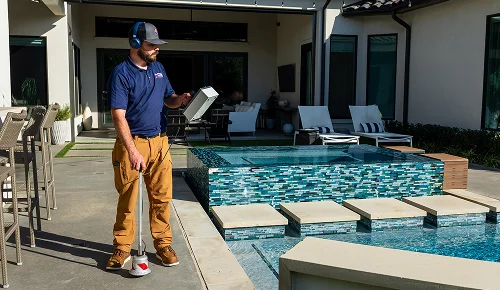 For 50+ years, we’ve developed tools to make leak detection faster and less disruptive.
 -
Solutions Tailored for You
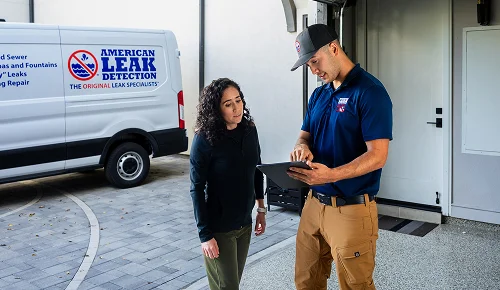 Learn all your options with pros, cons, and costs before making any decisions.
 -
Preferred by Top Insurers
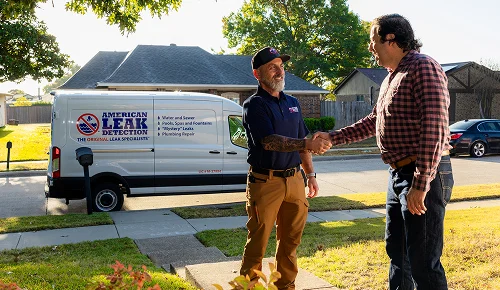 Pre-approved with top insurers means faster claims and smoother coverage.
 -
Trusted Specialists
 Trained specialists who detect leaks in every system, from pools to commercial pipes.


